6,562 PM E-DRIVE Chargers Approved, None Installed — The Execution Gap
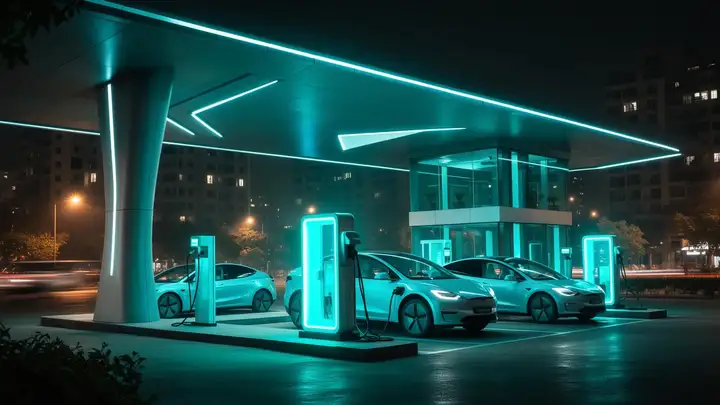
On 4 August 2026 the Union government told Parliament that 6,562 public EV chargers have been approved under PM E-DRIVE — and not one has been installed yet. Days later the Ministry of Heavy Industries confirmed the scheme has supported 26.5 lakh EV sales as of 22 July. That contrast is the single most important fact in Indian charging right now.
Read it as an opportunity, not a scandal
Vehicles are being subsidised into the market far faster than public charging is being commissioned. Approval is not installation. Every approved-but-unbuilt charger is demand sitting on a road that has no reliable place to charge — and that demand goes to whoever actually commissions a working site first.
Why approvals stall
The bottleneck is rarely the money. It is the sequence: land control, DISCOM feasibility, load sanction, transformer procurement, civil works, commissioning, then CSMS onboarding. Miss one dependency and the whole chain waits. Public-sector implementers are structurally slow at this; a disciplined private operator is not.
The 90-day counter-position
PixellEnergy commits to 90 days from signed site to live charger. That is achievable because we pre-stage the dependencies — feasibility and load sanction run in parallel with civil design, hardware is inventoried rather than ordered per site, and commissioning onto our OCPP 2.0.1 CSMS is a same-day step, not a separate project.
What this means for landowners
If you have been waiting to see whether a government charger will appear near your property, the parliamentary answer is your signal: it may be approved, but it is not being built. A site that goes live in 2026 captures the traffic that a 2028 site will never recover.
Where the subsidy still helps
None of this argues against PM E-DRIVE. The up to 80% upstream-infrastructure subsidy on Category C sites remains the best capex lever available. The point is to treat it as an offset on a project you are executing anyway, not as the trigger that starts the project. Application guide here.
Kerala's Phase II is live
KSEBL has proposed 315 charging stations across 277 locations in Phase II and is explicitly seeking stronger private participation. Eligibility still requires an operating history, an owned CMS and a public driver app — criteria our partners inherit on day one rather than spending three years earning.
Act on the gap
Approvals will eventually convert. Utilisation, brand recall and driver habit will not reset when they do. Submit your site or partner with PixellEnergy and be live while the queue is still a queue.
Sources & References
- 6,562 EV chargers approved under PM E-DRIVE, none installed yet: Govt — Business Standard, Aug 2026
- PM E-DRIVE scheme supported sale of 26.5 lakh EVs, over 52,700 chargers installed: Govt — Moneycontrol, Aug 2026
- PM E-DRIVE scheme: KSEB eyes stronger private participation in EV charging station roll-out in Phase II — The Hindu, Jul 2026
- PM E-DRIVE Scheme — official portal — Ministry of Heavy Industries, Government of India
Figures cited are as published by the sources above on their stated dates. Policy quantum, caps and tariffs change — verify with the relevant nodal agency or utility before committing capital.
Partner with PixellEnergy
Turnkey EV charging station setup starting at ₹15 lakhs. Zero CPO commission on your revenue.
2026 South India EV Charging Subsidy Guide
KSEB, BESCOM, TNPDCL & TGSPDCL approvals, subsidies & installation costs — free download.